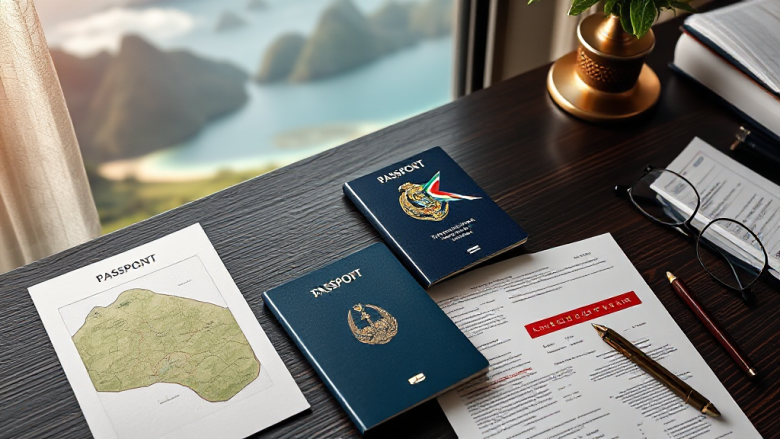
What You Need Before Applying for Vanuatu Nationality
You have read about Vanuatu citizenship, you have seen the passport rankings, and you have decided to look into it seriously. Now the practical question hits: what do you actually need in hand before you start? The problem is that most write-ups jump straight to the benefits and skip the preparation, which is exactly where applications stall. This is a review of the groundwork, based on how the process is structured under the Citizenship Act [CAP 112] and what the official information at https://vanuatunationality.com/ makes clear about the legal side. If you want to avoid wasted months and repeated document requests, the requirements come first, the procedure second, and the verification checks last.
Requirements to Confirm Before You Begin
Vanuatu nationality is not a single pathway. The Citizenship Act [CAP 112] sets out several routes, and the documents you need depend entirely on which one applies to you. Before anything else, you should be able to answer one question honestly: are you applying on the basis of descent, marriage, naturalisation, or the citizenship by investment programme? Each route has its own evidentiary burden, and mixing them up is the most common reason people gather the wrong paperwork.
If you are pursuing citizenship by investment, the threshold requirements are financial and character-based rather than residential. You will generally need to demonstrate the source of the funds used for the contribution, not just the fact that the money exists. That means bank statements, sale contracts, business valuations, or dividend records that show a clean trail. A lump sum appearing from nowhere is a red flag, and it will slow the file down even if the amount is correct.
Character documentation matters across every route. Police clearance certificates from each country where you have lived for a meaningful period are standard, and they need to be current. Certificates older than a few months are often rejected, so the sequencing of when you request them is part of the preparation, not an afterthought. The same applies to medical reports, which usually must come from an approved practitioner and be issued close to the submission date.
Identity documents form the backbone of any nationality file. You should have a valid passport with sufficient remaining validity, a certified birth certificate, and, where your name has changed, the marriage certificate or deed poll that connects the old name to the new one. Gaps in the chain of identity are treated seriously. If your birth certificate spells your name differently from your passport, resolve that before you submit rather than during review.
For family applications, each dependent needs their own complete set. Children require birth certificates showing the parent-child link, and where only one parent is applying, consent or custody documentation may be requested. This is one area where applicants routinely underestimate the volume of paperwork. A family of four is not one application with three add-ons; it is four sets of documents that must each stand on their own.
Finally, confirm your own eligibility before you spend money on translations and couriers. Dual nationality is permitted under Vanuatu law, which removes one common worry, but it does not remove the need to check whether your current country of citizenship places any restriction on you acquiring another. That is a question for your own legal adviser, and it belongs in the preparation stage.
The Procedure, and What to Verify Afterwards
Once the requirements are confirmed, the procedure itself is more orderly than most people expect. The first formal step is usually the engagement of an authorised agent or representative, because applications under the investment route are not submitted directly by the applicant. That agent compiles the file, checks it against the current checklist, and lodges it with the designated authority. Choosing that representative carefully is part of the process, not a formality, because a weak agent produces a weak file.
Due diligence comes next, and it is the stage that consumes the most calendar time. The authorities review your identity, your source of funds, your criminal record, and your background across jurisdictions. This is where inconsistencies surface. A date that does not match between two documents, an address you forgot you used, or an unexplained deposit can all trigger follow-up questions. The best preparation is consistency: every document should tell the same story about you.
After due diligence clears, the application proceeds to the decision stage. If approved, you take the oath or affirmation of allegiance, and the certificate of registration or naturalisation is issued. Only then does the passport application follow. It is worth being clear about the distinction here, because people often conflate the two. Nationality is the legal status; the passport is a travel document that evidences it. Losing or damaging a passport does not affect your nationality, and that separation matters when you are planning travel or dealing with a consulate.
What should you check once the process is complete? Start with the accuracy of every detail on the certificate. Names, dates of birth, and places of birth should match your supporting documents exactly. A misspelling that seems trivial at issuance can become a genuine problem years later when you try to pass nationality to a child or prove your status to a bank. Request corrections immediately if something is wrong, while the file is still fresh.
Second, verify how your status will be recorded in your existing country of citizenship. If dual nationality is permitted there, you may have notification obligations. If it is not, you need to understand the consequences before you travel on your new passport. This is not something the Vanuatu authorities can advise you on, and it is not something to guess at.
Third, keep a complete personal archive. Store certified copies of the certificate, the approval letter, the oath record, and the underlying documents in more than one secure location. Proving nationality status later, whether for a child’s registration or for an administrative query, is far easier when you can produce the full chain rather than a single document.
Fourth, if you have children, look at the rules for passing nationality on. Descent-based claims depend on the parent’s status at the time of the child’s birth, and the requirements differ from the investment route. Understanding that now prevents surprises later.
The honest summary is that Vanuatu nationality is achievable, but the outcome is largely determined before the application is ever lodged. The applicants who move smoothly are the ones who confirmed their route, assembled consistent documentation, and understood the difference between status and passport before they paid anyone. Do the preparation properly, verify the result carefully, and the rest of the process behaves predictably.