Stock Cycles: Why Availability Beats Advertised Speed
There is a particular kind of frustration that only regular vape buyers in Singapore understand. You open a site, the banner promises delivery in under an hour, the product page loads, the flavour you actually want is listed, and then you tap the variant selector and see the greyed-out word: sold out. The speed claim was never the problem. The shelf was empty before you arrived. After enough of those moments, you stop judging a shop by how loudly it advertises its courier times and start judging it by something far less glamorous but far more useful: how it manages its stock cycle. That is what this piece is about, written from the perspective of someone who has refreshed too many product pages at the wrong hour and finally learned to read the rhythm underneath them.
For adult buyers in Singapore, the practical question is rarely “who is fastest?” It is “who actually has it right now, and when will they have it again?” A shop like Singapore lana vape lives or dies on that second question. Delivery speed is a promise you can print on a banner. Availability is an operational discipline you have to earn every week, and it is the variable that decides whether your order arrives tonight or whether you spend the evening comparing five other tabs.
How Local Stock Is Actually Held
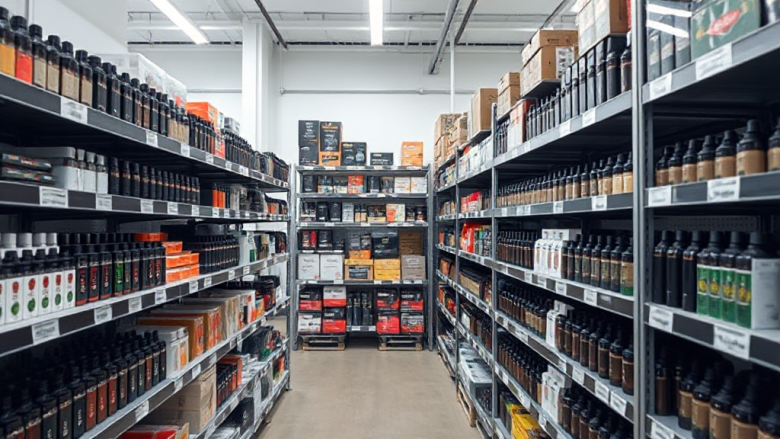
When people talk about local stock, they usually imagine a warehouse with endless shelves. The reality is more like a set of buckets, each with its own refill rhythm. There is the fast-moving bucket: the handful of flavours and device models that turn over almost daily, kept deep because any gap there is immediately visible to customers. There is the mid-tier bucket: popular but not frantic, held in moderate depth so it does not sit too long. And there is the long-tail bucket: niche flavours and less common variants, stocked lightly because holding them deep would tie up capital and shelf space for months.
This matters because it explains why a shop can have fifty listings and still be out of the one you want. The listing is not the inventory. The listing is a promise that the item exists somewhere in the supply chain, while the inventory is what is physically sitting in a Singapore facility waiting for a courier label. A retailer with genuine local stock, like the one behind lana vape sg, can tell you the difference in seconds, because the stock is on hand rather than on a plane.
Depth is the quiet advantage. A shop that holds three units of a popular flavour will sell out by mid-afternoon on a busy day. A shop that holds thirty will still be filling orders at 9pm. Same product, same courier, completely different customer experience. When you are comparing options, the useful question is not “do they stock it?” but “how deep do they stock it, and how often does that depth get tested?”
How Restocks Land and Why Timing Slips
Restocks do not arrive in a smooth stream. They arrive in batches, and each batch has to clear several stages before it becomes orderable inventory: supplier confirmation, shipment, customs clearance where applicable, intake, quality checks, and finally listing updates. Any one of those stages can stretch by a day or a week depending on factors nobody controls, from freight schedules to documentation reviews.
This is why the “restock date” on a product page is best read as an intention rather than a guarantee. A responsible retailer will update it when the shipment actually clears, not when it was ordered. The gap between those two moments is where most customer disappointment is born. If you have ever ordered on the strength of a restock date and then waited three extra days, you have felt the difference between a supplier’s promise and a retailer’s confirmed intake.
The practical takeaway is to treat restocks as waves rather than switches. When a popular flavour returns after a gap, the first day or two of availability is the most fragile, because everyone who was waiting has been notified at roughly the same time. If you are flexible on flavour, ordering in the middle of a restock wave rather than at its crest often gets you a smoother experience. If you are not flexible, then timing your order to land just after a confirmed intake is the single best habit you can build.
This is also where a shop’s local presence shows its value. A retailer holding ready stock in Singapore, such as Singapore vape delivery operations built around same-day fulfilment, can compress the intake-to-delivery window dramatically. There is no international leg between the shelf and your door, so the restock wave reaches you faster and with fewer surprises.
Reading the Signals of an Out-of-Stock Moment
Not all sold-out notices mean the same thing, and learning to tell them apart will save you a lot of wasted evenings. There are at least four distinct signals, and each calls for a different response.
The first is the shallow gap: a single variant goes out of stock while sibling variants remain available. This usually means the flavour is simply popular and the shop is mid-cycle. It often resolves within days, and if you are flexible, switching to a nearby variant is the fastest fix. Vape delivery sg
The second is the cluster gap: several variants of the same device line disappear together. That suggests a shipment-level delay rather than a demand spike. Waiting a few days is usually smarter than hunting across five sites, because everyone else is hunting too.
The third is the quiet listing: a product page stays up but the buy button is disabled for an extended period with no update. That is a signal that the shop has not yet confirmed its next intake. Treat it as a soft pause, not a broken promise.
The fourth is the full-line gap, where a whole category thins out at once. This is rare and usually reflects a broader supply rhythm rather than a single retailer’s mistake. In those moments, the shops that recover fastest are the ones with the deepest local relationships and the most ready stock on hand.
What you want from a retailer in any of these moments is honesty about which signal you are looking at. A vague “coming soon” is less useful than a plain statement that the next batch has cleared and will be listed on a specific day. That kind of transparency is what separates a shop that respects your time from one that just wants the click.
Planning Your Orders Around the Cycle
Once you accept that stock moves in cycles, you can plan around them instead of reacting to them. The first habit is to order ahead of need rather than at the moment of need. If you know a device or pod lasts you a certain number of days, place your next order a few days before that window closes, not on the evening it closes. This single shift removes most of the urgency that makes out-of-stock moments so irritating.
The second habit is to track the rhythm of your own preferred items. If a flavour tends to sell out on weekends, order midweek. If a restock tends to land early in the month, plan your larger orders just after that point. You are not guessing; you are observing a pattern that repeats.
The third habit is to keep a small buffer of a second-choice flavour or device. This is not about settling. It is about making sure a single gap in the cycle does not interrupt you. A buffer turns a frustrating evening into a non-event.
The fourth habit is to favour shops with confirmed local depth over shops with the loudest speed claims. Speed only helps when the item is on the shelf. Depth is what makes speed meaningful. A retailer offering Lana vape same day delivery is only as good as the inventory sitting behind that promise, and the ones worth returning to are the ones that keep that inventory deep and current.
It also helps to think about packaging and discretion as part of the same planning. If your order is going to a home or office where privacy matters, a shop that handles Sg vape shop delivery with discreet packaging removes a layer of stress that has nothing to do with stock but everything to do with whether you actually place the order. Convenience and privacy are part of availability in the broadest sense: the product is only truly available if you are comfortable receiving it.
What Availability Really Tells You About a Retailer
Advertised speed is a marketing decision. Availability is an operational one, and it exposes more about a retailer than any banner ever will. A shop that consistently has stock when you check, that updates restock information honestly, and that holds enough depth to survive a busy weekend is telling you something important: it has invested in inventory, supplier relationships, and local logistics rather than just in copywriting.
For repeat buyers in Singapore, that is the signal worth optimising for. Not the fastest claim, not the flashiest promotion, but the steady rhythm of a shop that knows its own cycle and manages it well. When you find one, the frustrating evenings of greyed-out buttons become rare, and ordering becomes what it should have been all along: a quick, predictable task rather than a small gamble.
So the next time you are comparing options, look past the delivery timer and ask the quieter question. How deep is the shelf? When did the last batch land? How honestly is the next one described? The answers will tell you far more than any speed promise, and they will decide whether your order arrives tonight or whether you spend another evening refreshing a page that never had what you needed in the first place.